Sunday, October 13, 2013

The Mystic Made Ashes

The Last Nostalgia: Poems 1982-1990 by Joe Bolton

My first reaction to reading these poems was that I was reading my own—scribblings, musings, conceived in some fatal rush of feeling in the days when I was young and reckless and living on my own in New York. Not that I could have written this well. I couldn’t have. Rather, it was the particular loneliness and longing in the poems, their high romantic spirit, that I recognized as my own—that vain, if exquisite grief that can only be courted when young, that can only be courted with words. Reading these poems was like stumbling upon an older, younger self.


Autumn Fugue

I remember how the silver leaves fell down,
Extravagantly, as if in prefigured spirals,
From the fig tree you couldn't keep alive,
And how, when you’d sat watching for a while
That lovely dying, then turned your face to me,
Your face seemed the same silver of the leaves.

It had to do partially, I suppose,
With the light—how the brief and intense dusk
Along 14th street gathered in the canopy
Of chestnuts choked with vine, filtering
In through the three windows of your white room
To make a luminous lake in which we swam.

Looking all that autumn for a holier way
Of talking about things, you found yourself
Hardly able, at last, to speak at all;
And so, for long moments, no word would pass
Between us, when we had only to listen
To the quarter-hourly noise form a nearby church.

There was something greater t the sadness
Than simply the going away of your lover,
Or even our past failures at love.
What sadness there was carried with it the weight
Of something intensely formal, and which would not
Be overcome by anything so commonplace

As a gesture shred between the two of us.
And so, as the light faltered and the leaves fell down,
I’d light a cigarette and sip my drink,
And you’d arrange your body at the window
Like some unfinished portrait if yourself…
If there is nothing between a man and a woman

Except the light by which thy see each other,
And a past in which they appear continually smaller,
And a future that seems already to have acquired
The irrevocability of the past,
It seems important, nevertheless to acknowledge
Their brief victory: the surviving it. 

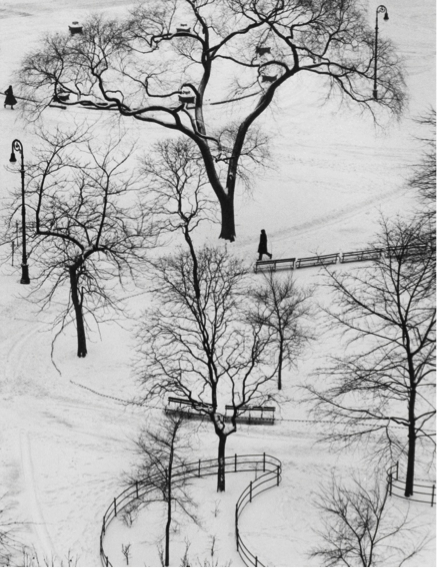
This past summer I visited NYU in Greenwich Village with my wife and sons. It felt strange to be back there again, after so many years—on University Place, at St. Mark’s Bookshop, in Washington Square Park, where I’d spent so many hours as a student, book in hand, sitting on a bench or wandering the paths, so lonely, so wretched some days I was sure that I would choke. For I remember feeling much like the speaker in these poems, much like Bolton himself, who wrote his heart out in poem after poem, then promptly blew out his brains. He was just 28.

For the modern consciousness,” writes Susan Sontag in her well-known essay on Cesare Pavese, “the artist (replacing the saint) is the exemplary sufferer. And among artists, the writer, the man of words, is the person to whom we look to be able to best express his suffering.” Steeped in Faulkner and Vallejo, drinking heavily, and reeling from a string of failed relationships, Bolton suffered greatly, it is clear, wandering here and there, in the years these poems were written, from Kentucky to Florida, from Texas to Arizona, always restless, never easy, at peace.  All told, he expressed himself well. 

The Return

And when,  finally, you found your way back,
It seemed you barely recognized the place—
Or rather, the place barely recognized you.

The great rivers (Cumberland, Tennessee)
Rolled on as always; cardinals and jays
Skirmished among the crosses of dogwood.

But visiting friends, their faces both the same
And not the same, you realized how the loss
Of a common language could undo the world:

How the sky over each landscape contained
The blueprints of a city that might rise
When all your generation has gone away,

And how lovers were, in the end, reduced
To the sounds of names, the flesh utterly forgotten.
And it seemed then that you’d come  all this way

Only to pass unnoticed through the place.
Driving fast down dangerous, familiar roads
Like a shadow you had cast years before. 

While I would never wish to be young again, there are times when I miss the painful splendor of my days as a student in New York—the righteous alienation, the restless yearning, the heady, desperate belief in words that made me feel at once so powerful and helpless and free.

It is impossible to say what kind of poet Bolton would have become had he not committed suicide, yet the power of these poems lies not in their intimation of greater things, of genius snuffed out young, but in what the poet Donald Justice, the editor of this collection, calls “a certain blazing youthful freshness”—enough to give any writer pause. 

Fathers and Sons

“But the sultriness of noonday passes, and evening comes, and
night, and then, too, the return to a calm haven, where sleep is
sweet for the tortured and the weary…”
--Turgenev

In my father’s recurring dream,
His life’s humiliations take on the form
Of a procession of slow-drawn, open boxcars.
A hideous old man hangs out by one arm
From each of them, his blackened face leering.

It’s late winter as he tells me this.
We’re sitting on the back porch, sipping beers,
Watching the dusk play itself out
In a lightshow through the woods,
Shocked yellows and reds blazing the leaf rot

Where the neighbor’s son lay down and
Shot himself last October, the note stuffed
In his shirt pocket: Pretty place
To die. They’ve moved away now,
Their house empty and up for sale.

A train sounds in the distance, pure sound,
Its fading whines and shudders dragging off
What’s left of the light, while my breath
And the stars my breath rises to meet
Become visible against the dark.

And this evening I understand
What little consolation stars are—
How their shimmering is out of reach
As the smooth stones or the small fish flashing
In a frozen-over stream, and how my father,

Staring up at them, can only think
How alone he is out here, among these wasted
Fields the woods are reclaiming year by year.
“It’s terrible, just terrible,” he says,
Meaning his dream.  “It goes on forever,

And there’s nothing I can do to stop it.”
And we can’t help each other, he and I.
We’ve perfected our obsessions and traveled
Too far into ourselves, like the mystic
Made ashes by his own imploding light.

John Bolton (1961-1990) was born in Cadiz, Kentucky, the son of schoolteachers. The Last Nostalgia is published by The University of Arkansas Press. http://www.uapress.com/


Peter Adam Nash


Thursday, October 10, 2013

Old Friends and Dear Life


When I arrived home today, this stack, photographed a couple of days ago, had toppled to the floor, as I knew it would.   That's Charles Baxter's Saul and Patsty on the bottom of the pile and the Penguin Selected Essays of Montaigne on the top.  Over there on the right are the Journals of Thoreau, purchased last August at the Strand; James Wood's The Fun Stuff was the anchor of this pile until he failed me and leaned in, as the madmen are saying. Sometimes my book piles fall over in the middle of the night, which isn't optimal.  But I've treated my books this way for half a century--as sturdy blocks of prose and poetry to be acquired and read and kept close at hand, as disorganized as one's own mind, tottering and bending until the forces of gravity spew them underfoot.  I'm a poor carpenter, and the "built in" bookshelves I put up around the house always end up looking like gerryrigged Republican redoubts in Kansas or the scalene  national boundaries of Azerbaijan.

However, thanks to today's crash I was able at long last to lay my hands on some old friends I haven't seen in months. Amidst the chaos I chanced upon Donald Hall's The Museum of Clear Ideas, published in 1993, and containing his wonderful poem "Baseball"--remember it?  Nine innings of verse explaining our national pastime to Kurt Schwitters, "Merz-poet and artist, / whose work was clothing, office, bedroom, /and carapace..." Don Hall of New Hampshire is, perforce, a fan of the Red Sox, which I am not, but he wrote delicate and nostalgic poems about the greatest sport ever invented, tender in their evocation of warm July evenings spent at the ball yard, poems that sing in the way Roger Angell's great essays on baseball sing--of youth and hope and the melancholy of loss.  Don Hall--a wonderful straight up no chaser American name--who I heard read "Kicking the Leaves" in person years ago, wrote the poems in this fine book while the love of his life and fellow poet (perhaps even a better poet) Jane Kenyon was still alive, and since I'm a sentimental sort, I'd stacked Jane's book Otherwise next to Don's so that they could lie together on the floor amidst the scattered debris of history and philosophy.  Here's the eponymous "Otherwise" in case you've forgotten it:


I got out of bed
on two strong legs.
It might have been
otherwise. I ate
cereal, sweet
milk, ripe, flawless
peach. It might 
have been otherwise.
I took the dog uphill                                      
to the birch wood.
All morning I did 
the work I love.

At noon I lay down
with my mate. It might
have been otherwise.
We ate dinner together
at a table with silver
candlesticks. It might
have been otherwise.
I slept in a bed
in a room with paintings
on the walls, and 
planned another day
just like this day. 
But one day, I know, 
it will be otherwise.


And there, toppled under my reading chair, is a gorgeous red Harvard paperback, purchased at the Tattered Cover in Denver in the 1990's--Sor Juana, or the Traps of Faith by Octavio Paz.  I haven't looked into this book in years. The cover shows Sister Juana wearing a Sacred Heart of Jesus the size of a pizza plate; inside, Paz has provided biography, historical context, literary criticism and a subtle psychological reading of the seventeenth century nun's view of "the world as hieroglyph."  In Sor Juana's own words: "I have sought to veil the light of my reason, along with my name, and to offer it up only to Him who bestowed it on me, and He knows that none other was the cause of my entering into religion not withstanding that the spiritual exercises and company of a community were repugnant to the freedom and quiet I desire for my studious endeavors."  It could have been otherwise.  Sor Juana plays a little fast and loose with the facts for if Paz is to be believed what she wanted wasn't the convent at all, nor the sacred Groom whom all nuns marry, but simply to be left alone to write.

Poor John Berryman has finally lost his high perch--this copy of The Dream Songs, in hardcover, a first edition, cost me ten bucks in 1969: "Your face broods from my table, Suicide."  There's The Russian Revolution (R. Pipes/886 pages) crushing the diminutive Selected Garcia Lorca--what was I thinking?  And Churchill, whom I despise but have to have handy, still looks after three decades like a chunk of blue brick.  My taxonomy is based on gravitational forces rather than subject matter: big books (usually) on the bottom so that my stacks tend to be perched on thousand-page biographies of politicians (Caro's Johnson holds up five, and quite steadily), then come many paperback novels and, as is only proper, above my window frames, the heliotropic poets of the contemporary era.  My best stack, unmoved for five years, stands proudly on Stephan J. Gould's unread (by me) The Structure of Evolutionary Thought--the redwood of my library.


Left alone to write: here, next to my foot, stuck together (I'm sorry to say) with years-

old spilled coffee, are E.M. Cioran's

On the Heights of Despair, Richard Yates's Liars in Love (a Delta paperback purchased at the Penn Book Center in 1982--so dried out, apart from the coffee, that it's now bound with an elastic band), and, the odd-ball of this melancholy trilogy, Clancy Martin's How to Sell, a cut-throat novel about (of all things) the Ft. Worth Diamond Exchange.  Three fine titles, now wiped clean, that trace the absurdity of human existence and/or of selling ostentatious jewelry to rich Texans.  Ciroan wins the sad sack contest hands down: sample Cioran chapters include, "The Return to Chaos," "The Blessings of Insomnia," and, my personal favorite, "Nothing is Important" as only a Romanian "philosopher of despair" could.  I bought this book in grad school, probably because Sartre and Camus seemed to me poseurs--what, after all, is French despair compared to Romanian?  Yates, of course, was the most under-appreciated chronicler of futility ever to write in English--"A Natural Girl," in Liars, is one of my favorite stories. I think I'll stay up tonight to reread it.

Actually, no I won't.  First I have to pick up this untidy pile of books and then, in honor of a another great writer, I'll read Alice Munro's story "The Eye," from her latest, and, I'm sorry to say, her final collection (like Philip Roth, Munro is retiring from writing, if she can) Dear Life. And tomorrow, or sometime, we'll get to those bookshelves. 


George Ovitt (10/10/13)


Friday, October 4, 2013

A Third Down, Two Thirds to Go

1Q84: A (Very Long) Novel by Haruki Murakami

Part I: 387 pages

Part II: 352 pages

Part III: 417 pages


I first purchased the 1100-page one-volume edition of Haruki Murakami's latest novel, but it was too cumbersome so I traded it in for the nifty three-volume set, paginated as indicated above--plump little paperback volumes that were not aggressively large.  They fit one's hand, have beautifully mystifying covers (twin moons and a woman's eye, both derived from the plot), and a clear slip case.  I suspect that Random House-Vintage was emulating the success of FSG's three-volume slip-cover edition of Bolano's 2666, but that was Bolano and the moment his masterpiece was published I bought the one-volume edition in hardcover, no questions asked.  Nobody makes a nicer book these days than Farrar, Straus, and Giroux--the binding on 2666 cracked after two readings, but the paper is slickly heavy and the cover art and book design are astonishing, and I once again wondered at the poverty of Kindle-reading, but didn't give it much thought in the same way I wonder why anyone would drink Budweiser instead of real beer but in the end don't really care about the answer. Anyway, Vintage went the distance for 1Q84--the endpapers are black and white sky scenes (clouds, moon) and the book's designers packed in as many adulatory blurbs as they could knowing that a thousand-plus page novel was going to be a hard sell, especially from a Japanese writer who is, let's face it, hardly a household name.  If Dan Brown were to write a thousand pages at least ten million people would eagerly plop down the now-standard $27.95 that a big commercial book costs; but $30 for Murakami requires the hard sell: "A grand, third-person, all encompassing novel..." (NYT).  An odd remark: what does "the third person" have to do with anything?  But the best comment, as one would expect, came from Charles Baxter, a writer who knows a thing or two about storytelling: "[1Q84] is generous in the way that Philip Roth is generous; you get the feeling that everything Murakami has thought, and felt, and experienced, is out there on the page.  Nothing gets held back, not even the ugliness--especially the ugliness..."  [my emphasis] I'm only one-third of the way through the book, and not sure I'll press on, but this observation seems exactly right--nothing is held back, and that can make a novel compelling (Proust!) but it can also turn a story into a slog (The Recognitions).  Which is 1Q84? Let's think about this for a minute.


If you've been to Tokyo you've seen a street like the one above--a narrow defile flanked by gaudy neon signs lettered in katakana, stylish young men and women, boisterous sounds of video arcades (I haven't been to Tokyo in a while and I suppose the arcades are gone), noodle shops, bars and sushi restaurants.  In other words, the sort of lively urban spaces that make Tokyo an exciting, if daunting place to visit.  I don't wish to be glib, or to diminish Murakami's extraordinary accomplishments--he is, I understand, on the short-list for this year's Nobel Prize--but he has always seemed to me to be the poet of this world--not at all a pop writer of erotica and drugginess like Ryu Murakami (Almost Transparent Blue) and not a novelist with the stature of Yasunari Kawabata or Jun'ichiro Tanizaki, but a hip, smart, inventive and perceptive chronicler of an odd-ball segment of Japanese urban life.  His novels are full of coincidences, off-beat characters, and situations that express the slippery unreality of everyday life.  I am especially fond of After Dark, Kafka on the Shore, and Norwegian Wood--the first of his books to make a splash in the West.  I am entranced by the unusual way in which, from nearly nothing, Murakami can cobble together a compelling story of outcasts in a world whose existence I can't even imagine.  Wind-Up Bird Chronicle, I must admit, was my first failure with Murakami: I began the book with high hopes, wondering at the tightrope he was walking,  but was defeated as the story's cogency began to dissipate amidst dense paragraphs of what seemed to be irrelevant musing on tangential topics. WUBC provided a foretaste of my puzzlement with 1Q84 and, I now have come to feel, with Murakami's work in general.  I love big books, but I don't love self-indulgent books.  Or, I don't feel compelled to push through novels that seem more interested in the writer than in the reader. 


The third of 1Q84 that I have finished today has the following plot: a young Japanese woman named Aomame is an assassin who specializes in killing men who abuse women; she teaches martial arts; she lives alone but would very much like to find a man to fall in love with--meantime, she sleeps around.  Her story alternates with that of a young man named Tengo who would like to fall in love, who aspires to be a writer and who has been enlisted by an unscrupulous editor in a plot to win a major literary prize for an all-but-illiterate girl who, we are supposed to believe, is a preternaturally gifted storyteller.  That's about it except for one important point: both Tengo and Aomame (who will, I'm pretty sure, meet and fall in love in volume II) feel as if they have "slipped" into another temporal dimension.  It's hard to characterize this feeling that they have, though I understand it.  One does sometimes feel that one has fallen into a temporal black hole, or that there has been a slippage in one's life--things are not quite as they used to be and yet it is impossible to say exactly how they have changed.  In Murakami there's always this sense of unreality in the lives of his characters--salarymen or street folks, old people or young, everyone behaves as if the world were off-kilter, and this unsettling existential vertigo is both one of the great charms and deep frustrations of his books.


But what is more difficult for me is what Charles Baxter points to in his remarks on Murakami's writing--the lack of apparent discrimination between what is essential to the story, what is ancillary to the story, and what has nothing to do with anything (we learn, for example, exactly what everyone eats--I mean exactly).  Of course in a long book like 1Q84 we are being led down a rabbit-hole; many trivial events probably have a deeper resonance--the look in the eyes of a little girl on a train who reminds Tengo of something he can't recall, or the rather tedious details of the "Dowager's" life--all of this will probably mean something, but I know from Murakami's other books that this expectation might be disappointed; the piling on of details may lead to nothing at all and I will be left to wonder at the expenditure of time and energy that has gone into my reading of this (very long) novel.

And yet: there is something compelling in the thing.  First of all, the size of the book is irresistible: who wants to read novellas and short stories when the world is full of Infinite Jests? I thought about my Murakami problem quite a lot during the past week and spoke to my colleague Peter Nash about it.  Peter thinks there's a glitz and attraction in Murakami that entices us to give him the benefit of the doubt; the style is glib, easygoing and quite easy to fall in love with; but, in the end, (Peter and I both thought) there is a feeling that we've been enticed to pass a long night drinking and carousing, singing karaoke and knocking back shots of sake, but, when it ends, we're stuck on the same neon-lit street, a bit woozy but no wiser than when we began.

Dear Talented Readers, what do you think?  Should I go on or turn back?  The summit lies far in the distance, shrouded in moonlight and wispy clouds; love affairs, murders, and plagiarism stand between me and Mt. Murakami.  And, worst of all, there's a pile of books here on my desk that I am eager to take up--novels by Amouar Benmalek, Leon de Winter, and Cees Nooteboom impatiently tap their fingers on my computer wondering when in hell I'll finally renounce this oddball concoction of noir thriller and sci-fi mystery--a book written, as it were, by Doris Lessing and Stieg Larsson, right down to the martial arts heroine.  What to do?

Any advice would be welcome.


Published by Vintage in paperback (3 volume edition).
Chipp Kidd designed the book--its lovely.  Here is Mr. Kidd on the process--
http://www.youtube.com/watch?v=aUHck0FViac


George Ovitt (10/4/13)


Wednesday, October 2, 2013

The Crimes of Our Fathers: Germany—Algeria—France

The German Mujahid by Boualem Sansal

Are we answerable for the crimes of our  fathers?  That is the question that haunts this bold and surprising novel by Algerian writer, Boualem Sansal, a story that moves back and forth through time and space, from present-day France to WWII Germany, from Paris to Frankfurt to the Algerian bled, to the desolate village of Aïn Deb, then back again to Paris, to an unnamed North African banlieue or suburb, one very much like Clichy-sous-Bois, made famous by the violent clashes between local youth and the French police in 2005 after two boys were accidentally electrocuted in an electrical substation while in hiding.

I first heard of Algeria when I was a child living with my family in the South of France. Charlie Joubert, the husband of my schoolteacher, the beautiful Lucienne, was from Algeria, a pied-noir or “black-foot,” as such Algerian-born Frenchmen were commonly if derisively known. Hounded out of Algeria following Independence, then treated as second-class citizens in France, the pieds-noirs have remained an embittered, doubly-alienated lot. In the little town of Dions where I lived in the early 1970’s, Monsieur Joubert was still viewed as an alien, an outsider, my schoolmates—no doubt voicing the prejudice of their parents—often muttering “kouskous” when they passed him in the street.

This story, however, is about a different sort of alienation, that of two Algerian boys born to a German father and a Berber mother. Opening with the suicide of one of the brothers, the eldest, a boy called Rachel (after Rahim), in the Paris suburb where he lived, the story follows the tortured emotional and psychological journey of his younger brother, Malrich (after Malek), as he struggles to come to terms not only with his seemingly successful brother’s suicide by gas and with the murder of his parents in Algeria by Islamic fundamentalists, but with his father’s secret Nazi past. 


Told as a journal within a journal, the novel explores, in fiction, in heretofore uncharted ways, the long and deadly embrace of Europe and North Africa. Widely praised as the first Arab novel to confront the Holocaust, The German Mujahid is a brave and withering condemnation of European colonialism, German fascism, and Muslim anti-Semitism, as well as a bracing excoriation of the sort of radical Islam that remains the bane of North Africa and the Middle East today. Above all, it is a tale of self-discovery and the burden of justice, a story about that most essential human task: the charge—to each of us—to reckon with the past.

Boualem Sansal was born in 1949 in Algeria.  Since the publication of his novel Le serment des barbares, which was awarded the Best Frist Novel Prize in France in 1999, he has been widely considered one of his country’s most important contemporary authors.  He lives with his wife and tow daughters in Algiers.  The German Mujahid is published in English by Europa Editions.  Check out their list at http://www.europaeditions.com/ .

Peter Adam Nash

Tuesday, October 1, 2013

Jade Mirror

Women Poets of China, edited by Michael Farman


My love affair with (translated) Chinese poetry goes back many years, to my first encounter with Kenneth Rexroth's One Hundred Poems from the Chinese, especially his renderings of the lyric poems of Tu Fu, still among the handful of poems I read regularly, in all seasons, simply as a way of reminding me of what it means to have a human sensibility.  I had looked at the world in the way one does--as a reflection of my ego--and never considered, as the Chinese poets are so fond of doing, that the world isn't a mirror of my being but that I am a mirror of it.

 "A Toast for Men Yun-Ch'ing"

Illimitable happiness,
But grief for our white heads.
We love the long watches of the night, the red candle.
It would be difficult to have too much of meeting,
Let us not be in hurry to talk of separation.
But because the Heaven River will sink,
We had better empty the wine-cups.
To-morrow, at bright dawn, the world’s business will entangle us.
We brush away our tears,
We go—East and West.

Tu Fu often writes, as here, of furtive meetings with friends, of drinking until dawn, of the fleeting nature of joy--the parts of life, in other words, that we want poetry to remind us of, for if poetry does nothing else, it must put us in mind of the ephemeral nature of the things we wish to believe are enduring--love and friendship and pleasure and life itself.  It was from the questionable translations of Rexroth and Pound (via Fenollosa) and Arthur Waley that I first understood, falsely I am sure, the meaning of 'conditioned arising' in Buddhism, the transitory and painfully beautiful nature of human experience as expressed in poetry. 


Garcia Lorca is the Western poet whose sensibility most reminds me of the Chinese poets I admire; the simplicity of his diction, the openness of form, the poetic voice that stands both within and outside of the core of the poem as in this simple verse from Primeras Canciones (1922):
 
"Half Moon"

The moon goes over the water.
How tranquil the sky is!
She goes scything slowly
the old shimmer from the river; 
meanwhile a young frog
takes her for a little mirror.
("Half Moon," trans. by W.S. Merwin)

My attachment to this form of poetic expression--direct, "unmediated" by conventions of prosody, honest to a fault--led me to the usual folly: I studied Chinese for a while, and when it was clear that I was too dense to memorize let alone reproduce a single character,  I set out to write my own Chinese poems without benefit of the language.  Does it appear an easy matter to write a poem like this one?

"Written in a Pavilion Lost in the Mists"

spring flowers, fall's
full moon:
               the stuff of poems.

cloudless sun. clear
nights. here: mountain
                    spirits, loosed.

no reason I raised
the pearl-sewn blinds.
                won't lower them.

my couch is moved for good now.
I'll turn toward these hills
                and sleep.

(Yu Xuanji trans. by Geoffrey Waters)

What I have noticed is that aspiring poets can reproduce the simple description in this form-- reminiscent of e.e. cummings--but when it comes to the real point of the poem, where the observing eye moves inward, when the poetic sensibility must construct meaning from the passive moment of watching flowers and moon and mountain--this is where the trouble begins.  Most pastiches of this sort of transparent poetry miss the point right at the line "I'll turn toward these hills/and sleep." What? Isn't the romantic (and it is the easiest thing in the world to think of Chinese and Japanese "nature" poets as "romantics"--maybe not as loquacious as Wordsworth, but with the identical set of feelings) supposed to regard the hills?  Isn't it rather anti-climactic to fall asleep?  And that's the way these deceptive poems often work: they take us to the edge of a simple truth and turn it against us--this is the art of disappointment, or of beauty as emptiness rather than fulfillment.


"Inspired by Scenery"

Half window, the entire setting sun
a curtain lifts in the breeze
Little, little pond, pavilion
a bamboo path
Maple leaves drunk red
in autumn color
Two or three rows of geese
centered against the evening sky.

(Zhu Shuzhen, trans. by Emily Goedde)

I have taken these last two examples from the lovely collection Jade Mirror: Women Poets of China, edited by Michael Farman.  Mr. Farman has wisely decided to include an even dozen poets in this collection so that each of the twelve women, whose lives stretch from the period of Book of Odes (600 B.C.E.) to World War II, can be represented by a judicious selection and we can therefore develop some sense of what each poet was attempting to achieve.  As Farman points out in his introduction, it was hardly an easy matter to be a woman and a poet through most of Chinese history.  Convention, gender roles, education, and isolation kept women marginalized from the highly political and deeply masculine world of poetry--the ability to compose verses (if not poems) was, after all, a prerequisite of advancement in Chinese society. We may therefore be especially joyful at the publication of this collection of rare and graceful poems.

Most of these poets were new to me; I especially loved reading Zhu Shuzhen and Xue Tao--wonderful poets whose precise, evocative diction suited their subjects perfectly.  Here is Xue Tao:

Head bent, I stood long
before a rambling rose,

lovely as fragrant basil:
its scent clung to my skirts.

Master Sun of Jadegreen Stream,
explain it all to me--

those shrikes
departing from the east,
those swallows, flying west.

(trans. Jeanne Larsen)

Is the poem lovely as fragrant basil, or the rose?  Why do the shrikes depart from the east?  Has she asked the question or merely anticipated doing so?  Yes, we have to fill in quite a lot, but isn't that the point?


Jade Mirror is published by White Pine Press.

http://www.whitepine.org/catalog.php

George Ovitt (10/1/13)